

My journey to autonomy in my career
I have been a dominatrix and bizarre lady for over 3 years now – full-time and as my main profession.
Guests often ask me what I did “before” and are surprised that I didn't stay in that field and instead “do this now.”
As well-intentioned as these questions may be, they convey stigma and paternalism.
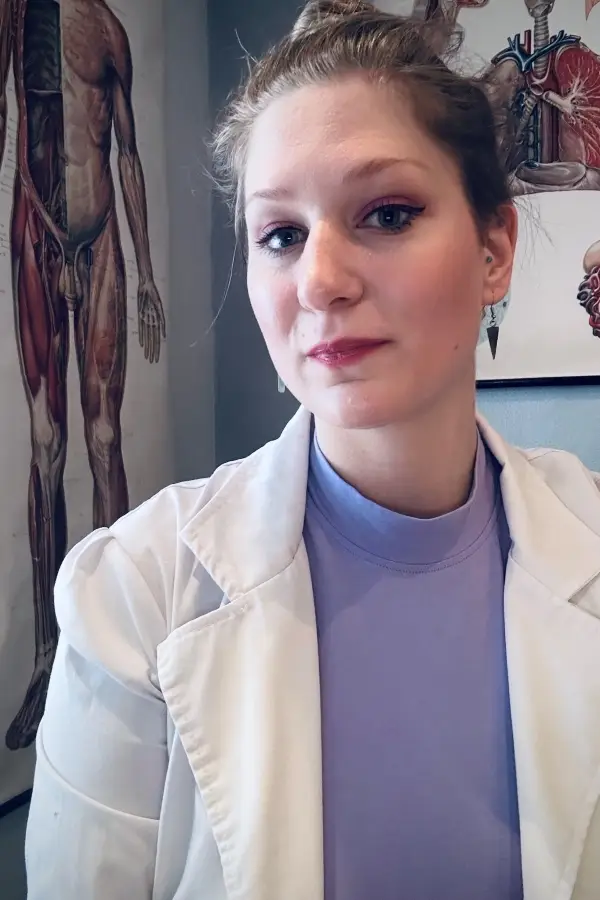
Yes, I studied. I have a Master of Science degree – equivalent to a degree in engineering with a focus on molecular biology. I started a PhD, but had to give that up for personal reasons. Overall, I was quite successful and on the path to a promising academic career. Cutting-edge scientific research in a relevant field.
Yes, I could continue this career. But I don't want to. To be honest, it's too precarious for me. Part-time pay for more than full-time work, fixed-term contracts, constantly applying for funding and keeping an eye on the progress of the competition. Not knowing in which city/on which continent I will spend the next 3-5 years and when I might be able to get a permanent position somewhere. Self-determination looks different to me.
Yes, with this expertise and soft skills, I could also look for a job in the private sector and would certainly find a “good position.” But I don't want to.
What is a “good job” anyway?
In the eyes of many, it is certainly not my self-employment as a sex worker in BDSM. While I somehow expect this from a cross-section of society, I am surprised how many of my guests ask me this question.
In the minds of many people, sex work is associated with precarious working conditions and living circumstances, personal and economic constraints, and this is certainly true for part of the industry.
Excessive living costs, low wages in many industries, a lack of housing and disappearing spaces for community in the city, exploitation of the most vulnerable – sex workers do not have a patent on all these problems. These are problems that affect society as a whole. But here, they become very visible very quickly.
I would propose the bold thesis that a society with a thriving sex industry is an economically and socially strong society. But that is something other researchers would have to investigate. It is not my area of expertise.
I've turned my hobby into my profession.
If I became an artist, baker, or yoga teacher, no one would think twice about it.
The fact that I earn my living as a dominatrix and bizarre lady is easily distorted by the media's portrayal of prostitution, which fails to distinguish between sex work and human trafficking or exploitation. The fact that I am paid money for a sexual service does not automatically negate my right and ability to negotiate consent and my right to have that consent respected. Anyone who thinks that is the case is succumbing to stigma.
I assume my guests are well-meaning when they ask me the question, “Why this now?” Perhaps they are also insecure themselves and simply want to hear clearly and unambiguously that I enjoy my job and do it voluntarily.
I can empathize with this, especially with the increasingly loud, fundamentalist demands for the Nordic model (prohibition of sex buying, criminalization of guests).
In a BDSM session with me, it is my heartfelt desire that guests feel safe, okay, and not ashamed or stigmatized for their sexual inclinations and needs.
These two worlds of emotion are difficult to reconcile. That's why I like to confirm how self-chosen and self-determined my work is and that I also have a lot of fun doing it.
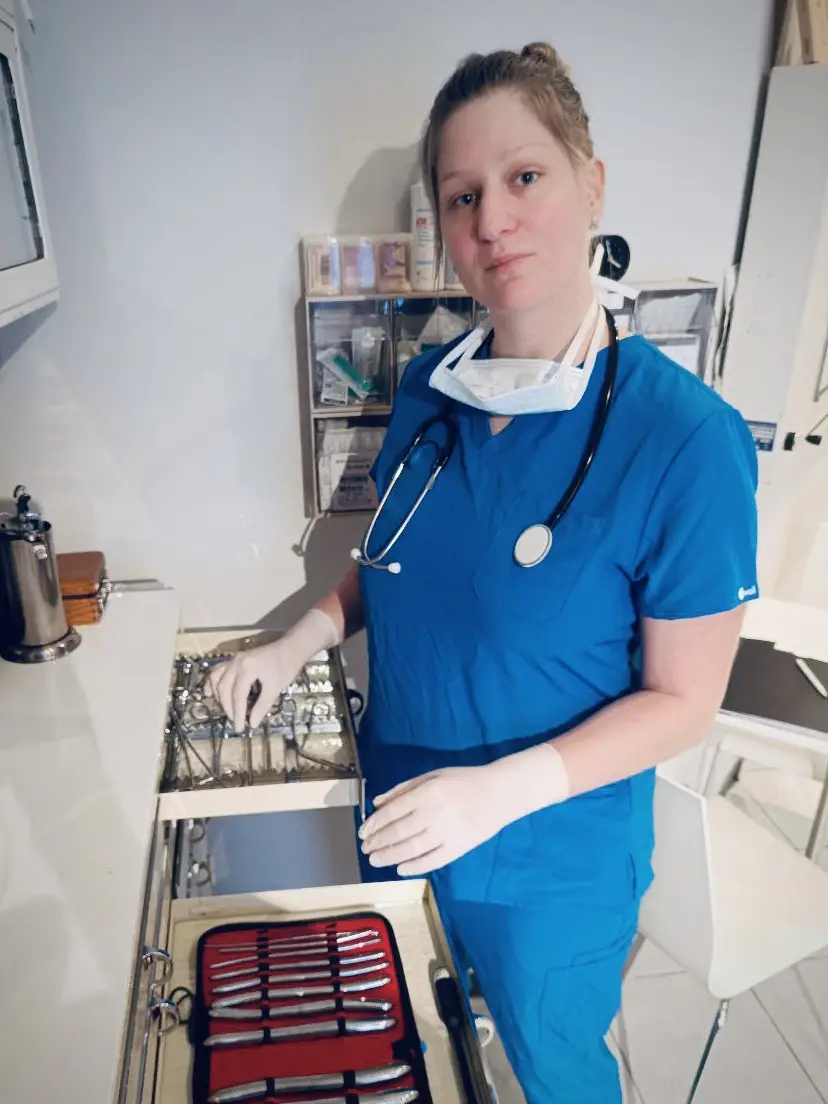
And I still wear my lab coat occasionally today... for clinic role-play.